Without a life of “representative works”, I decided to buy a single - Independent Art Consultant Viki Kuo
I'm a weirdo.
And I've always felt ashamed of myself for “being a weirdo” because I'm not like anyone else.
Having worked in the arts for many years, I could not always be as “unique” as everyone else—for example, as a “curator”, a world-wide artist, or as an art consultant who keeps an eye on auction trends and market dynamics, not just academics, lectures and research... And yet I keep changing my position: from galleries to institutions, from Asia to Europe, from institutional stability to the blurring belt of freelancing. There is no fixed title, no ladder of advancement, and even a “career narrative” seems broken.
“Where do you live now?” “What is your main occupation?” These questions just make me speechless. Not because I don't have an answer, but the answer is too complicated: “I'm currently in Paris, but I'm going to Taiwan next month; I'm an art consultant and I'm also preparing exhibitions, writing reviews, planning art trips; the people I'm talking to may be a veteran collector, or maybe an ordinary person who has never stepped foot in an art museum...”
“Not like everyone else” — that was what I was most shy to admit. When peers define themselves with titles, I feel like a disaster scene and can't find a perfect shape.
Movement is a state of existence
My biggest problem is that the variety of things I'm passionate about never intentionally limits my development. Today I sell, tomorrow I write, next week I navigate, next year I curate, and I also lecture at the institute. I'm not too keen on messing up other things that put my time in temporarily. It's okay, it's okay to reschedule! So everything I do seems to be just “sticking edges” and I can't seem to “accumulate” things smoothly.
In such a state, as if a moment had not been said, it took a turn, and the topic went around. People who listen are often confused, as if waiting for a whole time, but do not get the point. This blur and uncertainty is sometimes annoying.
It wasn't until recently that I really accepted: “Talking while walking” is not a flaw, but my way of survival. Perhaps, we should redefine not our own way, but rather the concept of “accumulating”.
The concept of “accumulation” is highly emphasized in modern capitalist-dominated societies, almost equating to “wealth”; in the age of agrarian societies, it represented a form of security — accumulation of food, resources, and survival; and in traditional systems of ownership, accumulation meant the concentration of resources, the distribution and control of power developed around a single center.
But is there a kind of “accumulation” that does not lie in the possession and concentration of resources, but in sharing and expanding? It is not linear, superimposed, rigid, striated, but helical, oscillating, recurved, like a line drawn on a loom — curved, edging, sometimes fast, sometimes slow, but never a broken line.
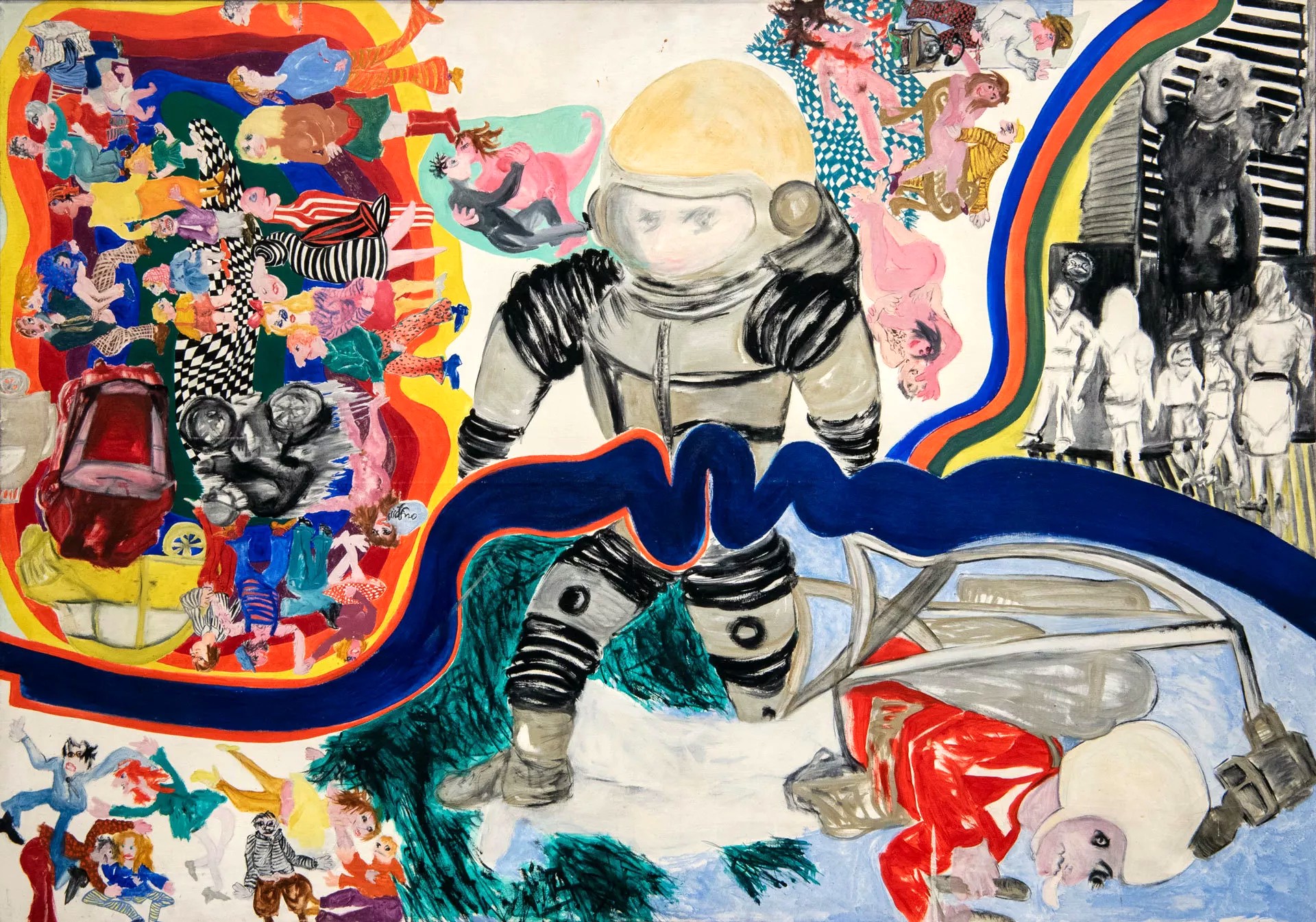
So I thought of the artist Jacqueline de Jong. Her work ranges from the frenzy and expressionism of the early CoBrA movement, to the American stage absorbing the energy and pop culture vocabulary of Pop art, to her later return to Europe to respond to war, refugees, and geopolitics with paintings — her creative trajectory is such fluid, unformed patterns. My intuition was keenly aware of the power of her work at the time, but it puzzled me on a rational level — why didn't she have a clear style? Even angry, why doesn't she paint almost as good as Alex Katz? Isn't that a good idea?
But when I now take her approach to my own movement and exploration, I suddenly realize: Her every shift in style is not a retreat, but a response, responding to that moment, to the most genuine anger, violence, observation, exploration, thought, or amazement that runs through her body. Her creation is for her The ultimate reflection of your own life and the world around you. Instead, we are so used to identifying an artist by “representative work,” so eager for a person to have a fixed recognizable image, so much that we can immediately call out her name or title when we point at this person, it is us who, when we hear the beginning of a sentence, we immediately want to know the word. What to express.
But life is not like that. We change, turn around, go to unfamiliar places, and then slowly find a rhythm that suits us. Just like in the same paragraph, we say while thinking and then bending, maybe we'll go back to the original topic but maybe not, and Jacqueline de Jong's creation and life are in the midst of those changes, just like me.

Non-linear pain is also an option
So I'm trying to see myself that way now. My change is not because of any hair disease that I have, but it is my way. All my thoughts and creations need to be moved—like a hint of light in a conversation, like every day's emotions and energize my expression. I am used to living between different cultures, making language a daily learning and error, repeatedly shaping and defining myself in doing and speaking.
I don't have a fixed career, but drift through these roles as “speaker” “feeler” “translator” “handler”. As for drift, it is not a drift, but a “multi-point root” that I reposition myself in every exchange, every exhibition, every lecture. I chose this method of accumulation despite taking its risks — that is, it is difficult to find a reassuring counterpart or example in mainstream society and values. But I have a cross-cultural, interdisciplinary perspective, training in integrative integration and innovative thinking, and most importantly, storytelling.
I can also tastefully drill into the works of the smallest audience, or look back at social connections and even the universe in time. I can guide a young artist into the gallery, or I can accompany a collector to meet a new star who has not yet entered the auction.
Not all travelers are lost.
This reminds me of a long time ago when, on the jackets of other climbers, I saw something like this:
Not all who wander are lost.— Not all wanderers are lost.
Yes! I hurt myself and others who are groping for directions, looking for position: our paths are sloppy, we can't see a straight line at first, but that's not a mistake, it's just another (not yet fully recognized in today's world) way, like a vine, climbing different points to life Long.
Not everyone will understand this way and shape, but you yourself know — what kind of path you are walking. The path is a little exciting, a little mysterious, but always exciting. You are often a lonely person, talking while walking, while living, but you never stop walking under your feet. What you say is carried away by the wind, some into seeds, some into reverberation—but it doesn't matter, walking is language itself.
Sometimes you are at the top of a mountain, sometimes at the bottom of a valley, sometimes stuck halfway.
But you can always stop and sit on the side of the road and whistle,
He said to himself, “What a good road, I have never been here.”
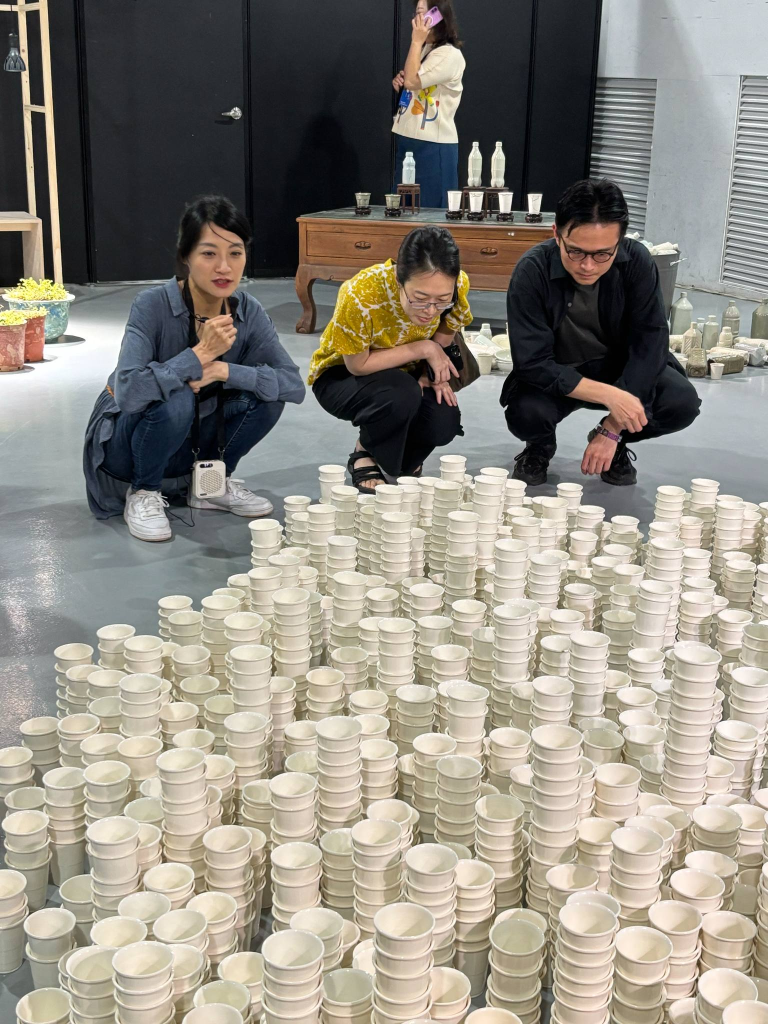
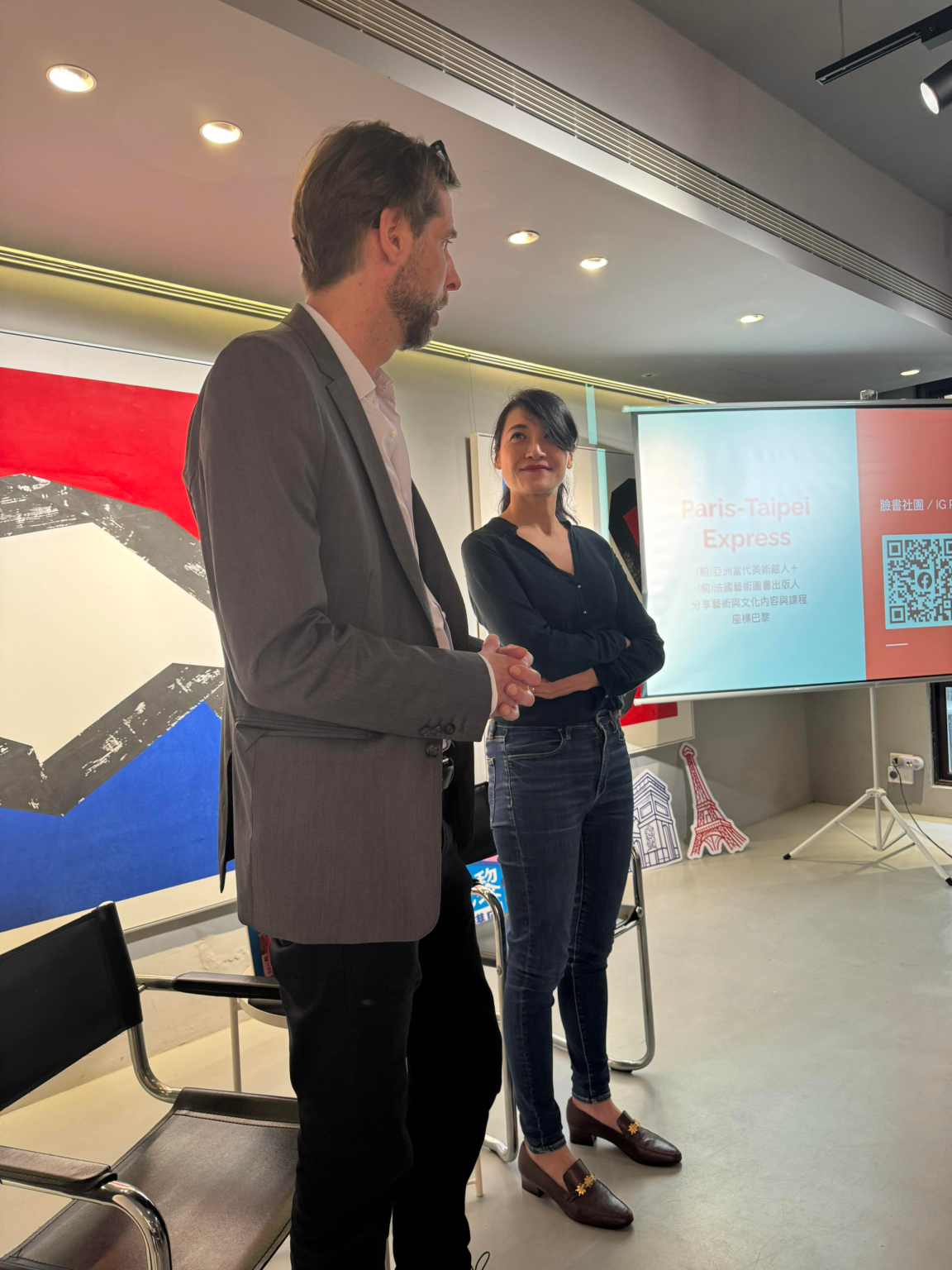
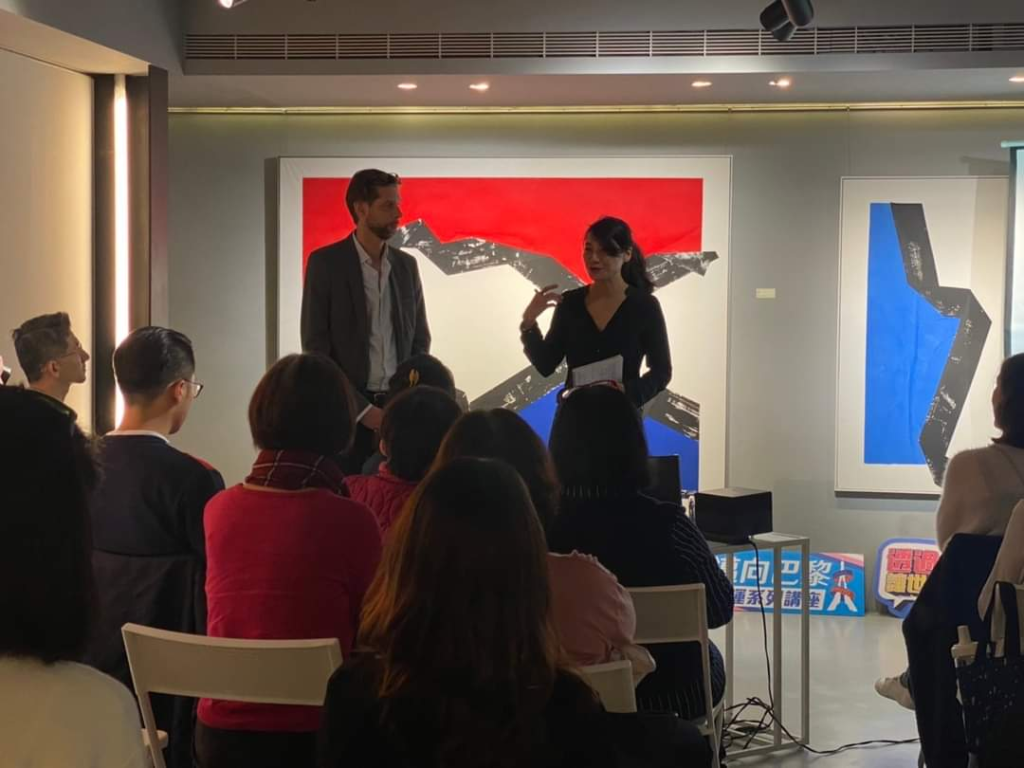
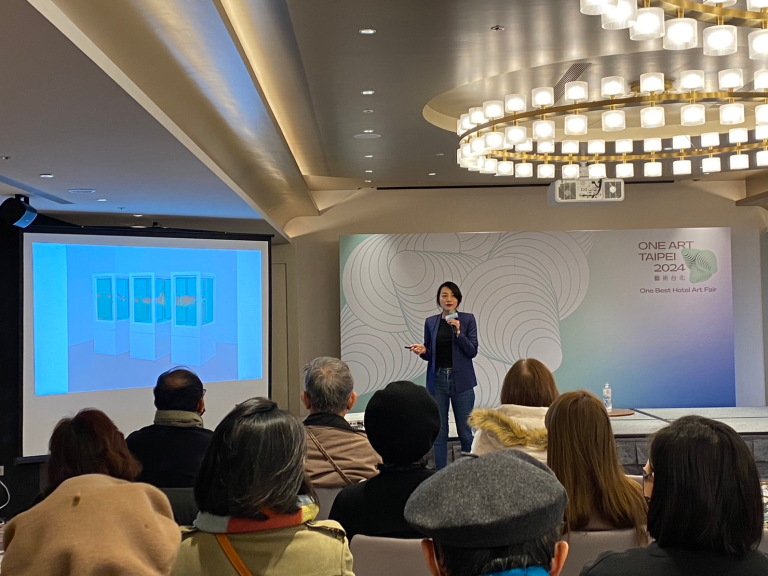
Not all who wander are lost.
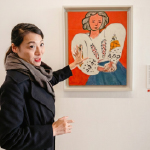
Viki Kuo
A long-time focus on the European art scene, bringing the latest exhibition pulses and artists' stories to Chinese-speaking audiences through writing, tours and courses. Create a dedicated platform to introduce and share art with the hearts of all art-lovers through ongoing writing and online and offline classes. To date, has organized and opened more than 60+ online and live lectures and courses (Paris/Taiwan), and at EAC Paris French Academy of Arts and Culture Management (2024), IESA Paris Institute of Higher Cultural Arts Management (2024—2026), OneArt Taipei Art Fair (2024-2025), Urban Living Aesthetics Works as art lecturers at institutions such as foundations and student societies.
Follow